*Client name has been removed for confidentiality purposes.
THE OBJECTIVE
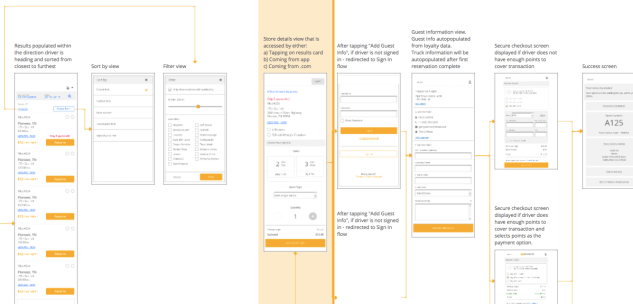
The purpose of the user testing was to assess the usability of a reservation app for truck drivers in order to validate design decisions and identify potential areas for improvement. In particular, we hoped that the research would allow us to determine whether the platform functionality meets the drivers’ expectations, evaluate the navigation flow based on user needs, gain more insight into truck drivers’ language & perception, and identify potential usability issues within the flow.
TEST SCRIPT
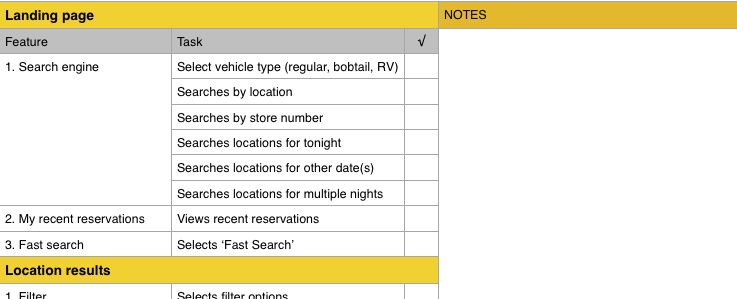
My first task was to create a script for testing which encompassed an introduction, screening questions, interview questions, and a task scenario for the user to accomplish. I used initial research findings to determine what kind of information we wanted to gather through screening and interview questions to understand our users’ background. The task scenario I created was accompanied by a checklist of features which served as an evaluation tool to track engagement & usability performance.
METHOD
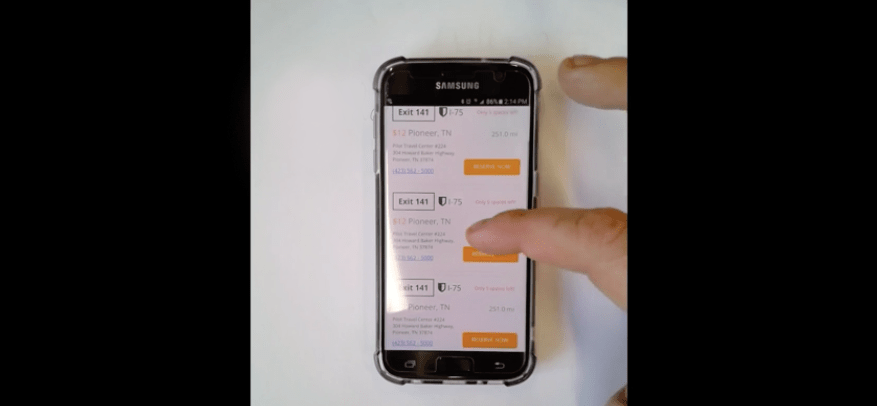
For testing, we traveled to a high-demand truck stop where we were able to get feedback from 6 potential users (30-45 minutes for each session). After we asked them interview questions, we presented them with the task scenario and digital prototype. As they attempted to make a reservation using the app, we observed their navigation through the flow and asked them questions along the way. After they completed the task, we asked follow-up questions regarding how the prototype did or did not meet their needs and expectations.
FINDINGS
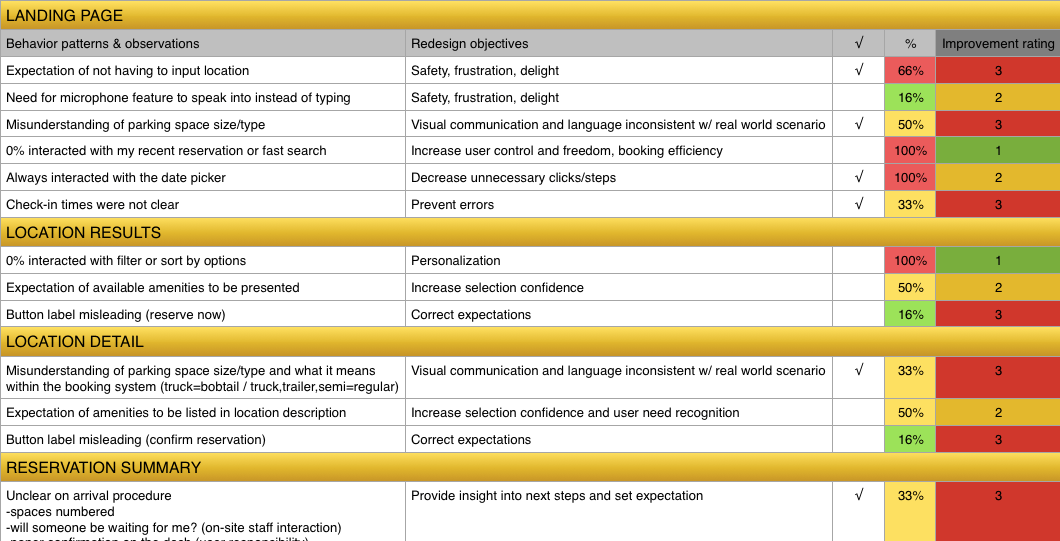
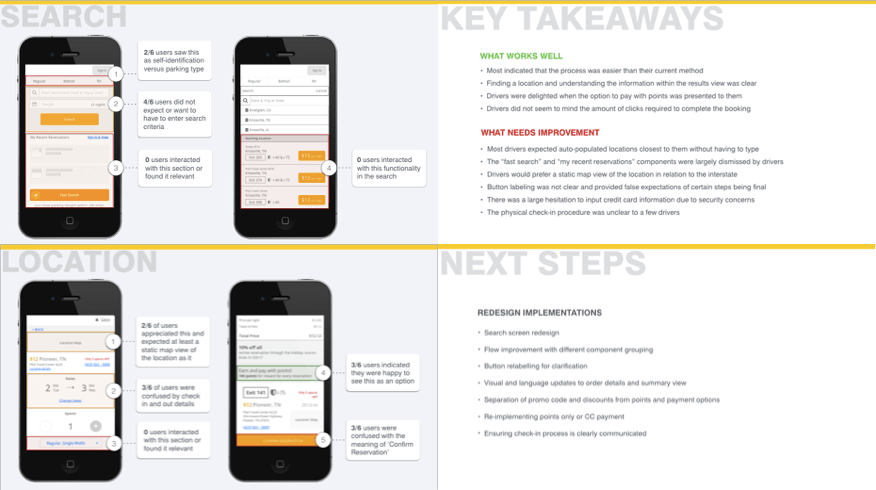
Following testing, my teammate and I worked together to synthesize the findings and extract actionable recommendations for subsequent design iteration. We reviewed our findings from each participant to identify patterns and evaluated the severity of issues throughout the flow. To organize the data, I created a table that included our observations, redesign objectives, the frequency of issue, and a rating of how much fixing the issue would improve the usability. This allowed us to prioritize what issues needed to be addressed first.
PRESENTATION
Once we identified patterns and major issues within the flow, we put together a presentation to show our findings to stakeholders. This included a summary of what we did, the goal of testing, step by step depiction of both successful and unsuccessful elements of the flow, as well as actionable design recommendations that would maximize usability.
 Jennifer Creek